Monthly Archives: July 2005

Enchantée


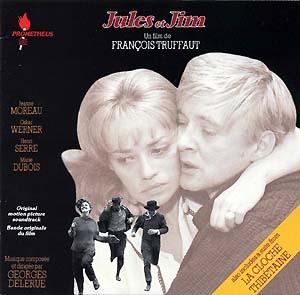
From the début issue of the Criterion Collection’s handsome e-newsletter, Criterion News:

Criterion producer Johanna Schiller recently received a very kind note from François Truffaut’s daughter, Laura Truffaut, on the occasion of the release of our DVD edition of Jules and Jim. “I really couldn’t be more pleased … I kept thinking of how much my father would have enjoyed watching films on DVD. The extras remind me of the newspaper clippings I still find, to this day, tucked in the pages of favorite books of his, which I now own.”

The full text is on the Criterion site. Very moving.

Categories:

Cartoon caption contest: Winner take all

The Portland, OR Tribune continues the tradition of local coverage of hometown cartoon heroes:

Local documentary filmmaker Eric Slade has won a New Yorker magazine cartoon caption contest. It’s a drawing of a business exec rushing out of his office with a surfboard under his arm, hollering to his secretary: “Tell my one-thirty things got way gnarly.” … There was no prize money, says Eric, but he’s getting lots of phone calls from people he hasn’t heard from in a long time.

What Slade (check out what I’m assuming are his interesting-looking films here and here) is modestly leaving out is his signed print of the David Sipress drawing, which is worth much, much more than mere money. As for the current contest, I’m afraid it’s one of those barren weeks without much to inspire effusion. #1, “Try telling that to the Kansas Board of Education” (Bob Schwartz of Cincinatti) is one of those editorial-commentary picks that have been popping up in the contest from time to time, so topical they won’t date well. #2, “Simple. I just wear my pants backward,” by Don Hailman of Wheaton, Ill., is disquieting and I can’t endorse it. I don’t think, although it’s been many years since I reviewed Defining New Yorker Humor, that it really qualifies. And #3, “What’s more important, youthful hair or F.D.A. approval?” by Rachel Kirkwood of Lexington, Ky., is funny—my pick—but also distressingly typical in that there’s a phrase, “youthful hair,” that I don’t think anyone outside an ad agency or maybe the goofy new MTV show The 70s House would ever use. Aside from that, though, Kirkwood’s caption is timely without being over-specific, inventive, and tells a whole silly story in eight short words. Well done. Vote now.

Since we are still in Kansas at the moment, Dorothy, read my pal Ben Adler’s fascinating roundup of actual conservatives’ opinions about evolution in TNR. For instance, the NYT‘s John Tierney: Whether he personally believes in evolution: “I believe that the theory of evolution has great explanatory powers.” Tucker Carlson: “I think God is probably clever enough to think up evolution.”

Categories: , , ,

The shot heard ’round the world

The big surge of indignation, and perhaps a few tacit nods, today are from the U.K. and related Elton John allies. Paul Carey in the Western Mail via ICWales:

US critic pans British musical

LONDON’S new hit musical Billy Elliot has been panned by a less-than-impressed New York critic who concludes that the British just can’t do musicals.

Despite rave reviews from almost every other quarter, the New Yorker magazine cuts to the chase, claiming that the show may as well be called Coal Diggers of 1984.

Noting how the adverts are emblazoned with a quote from the Daily Telegraph, “The greatest British musical I have ever seen,” critic John Lahr wonders aloud what on earth constitutes a great British musical.

Salad Days perhaps? The Boy Friend? Cats?

“The British love musicals,” he writes. “They just don’t do them very well.

“The jazz of American optimism … is somehow alien to the ironic British spirit.”

I haven’t witnessed a surfeit of American optimism lately among the artist class, but it certainly is essential to the classic musical comedies I live by, one of the many indications that I was thrown into the population much too late in some kind of celestial mix-up. From the New Zealand Herald:

‘Camp’ Billy Elliot musical hits wrong note in America

By Genevieve Roberts

It has been hailed as the best musical ever, and had British critics raving over the “exhilarating” and “terrific” performances.

But Billy Elliot the Musical has failed to make such a positive impact on the other side of the Atlantic. The New Yorker magazine has launched a scathing attack on the Elton John show, describing it as “mawkish”, “repetitive” and “camp”.

The verdict of John Lahr, the senior theatre critic for New York’s most influential magazine, could damage the musical’s chances of a transfer to Broadway.

In a two-page denunciation of the show, Lahr, who has written 17 books on theatre, dismisses Billy Elliot as being riddled with “narrative vulgarities”, “thematic bankruptcy” and general “sloppiness”.

His verdict clashes not only with critics’ praise for the £5m production based on the British film, but also the iconic status the show has gained among gay theatre-goers, who love the chorus line of coal miners dressed in tutus.

Lahr, on the other hand, says that the cross-dressing number that Billy performs with a young, gay friend is no more than “homophobic fun”.

He writes that Stephen Daldry, the director, Lee Hall, the writer, and Peter Darling, the choreographer, are “novices”, but instead of the expected recipe for disaster, he finds the performance a “recipe for a muddle masquerading as a major event”.

Lahr, the son of the actor Bert Lahr, is bemused by ads for the musical carrying a quote from Charles Spencer of The Daily Telegraph describing Billy Elliot as: “The greatest British musical I have ever seen.”

He wonders aloud what on earth constitutes a great British musical. “Salad Days? The Boy Friend? Cats?” he asks. “The British love musicals,” he writes. “They just don’t do them very well. The jazz of American optimism … is somehow alien to the ironic British spirit.”

Whereas the American musical is the expression of a land of plenty, England is a land of scarcity – “the Land of No”. The “narrative vulgarities” have been overlooked, he says, in favour of capturing the audience’s imagination.

“This, it seems to me, explains how a show with a mawkish, melodramatic book, and without a single memorable melody or lyric, could have worked its way so deeply into the public imagination.”

Daldry’s “narrative desperation” forces him to borrow from a “tattered grab bag of avant-garde tricks”, Lahr writes, in order to cover up the “lacklustre book and music”.

While he does not take offence to the show being branded a commercial hit, the critic wants his readers to know that it should not be perceived as excellent.

“When the most delightful part of a show is the curtain call – a 10-minute knees-up, with the entire cast, including the miners, now thankfully liberated from their earnestness, dressed in tutus – you know you’re in trouble,” he concludes.

Lahr’s downcast view was not shared by all Americans. Ray Bennett, of The Hollywood Reporter, described it as “the most irresistible show in ages”.

Elton John’s public relations representative, Gary Farrow, shrugged off criticism from The New Yorker.

He said: “Mr Lahr is entitled to his opinion, but he is the only one so we do not care. It is not representative of the reviews we have had which have described it as the greatest musical ever.”

I love Roberts’ equation of Lahr and The New Yorker with the entire American critical apparatus, which would be a nice world to live in. Now this is what I call an old-fashioned drama debate! It makes me feel right at home in the past. Choose your typewriter, Mr. Lahr, and Elton, your cigarette holder. At the count of ten, fire!

On Your Toes: “Billy Elliot” leaps from screen to stage [John Lahr review, New Yorker]

Categories: , ,

More mutual appreciation, please!


We’re just fans, originally uploaded by emdashes.

One of the great things about being a girl is that if you praise someone who’s praised you, and then it turns out you both admire a third person, and a fourth person, Scott McLemee, was the one who started it all, and everyone praises everyone—even then, no one can really call it a circle jerk.

Hence, my smooth palms’ warm but unbesmirched applause for both Minor Tweaks, which I have written about several times already, and whose clever proprietor, mild-mannered redhead Tom Bartlett, I finally met in D.C. this weekend over organic goodness in Dupont Circle; and also Tom’s recent recommendation, The Comics Curmudgeon. The brainchild of writer/editor (and, so far, stranger to me) Josh Fruhlinger, who (says his bio) has been “reading the entire comics section every day for as long as he can remember,” the C.C. is indeed all about reading exactly those parts of the funny pages you scan with mesmerised and often lonely fear—not to mention sometimes rewarded hope—and, this being the ’00s, reading into them on many levels, all witty ones. Fruhlinger reprints the strips (from “Beetle Bailey” to “Mark Trail” to, careful readers will be happy to see, Sally Forth) under discussion on the blog itself, which I can’t really do with the entire New Yorker, fortunately for everyone; think of all the accent-code keystrokes! Those really can make you blind.

Anyway, C.C. is just splendid, and I’m officially adding it to Check Every Day. A short list, indeed so short it can be recited in moments, meaning that those on it can consider themselves such adorably fun virtual company that I bet even Colby Christofferson, undisputed and long-reigning 1979-84 Madison, WI, dream date, would seriously consider taking them to the ’83 spring dance. Theme: ’57 Chevy Café. Don we now our pegged pants and circle pins! Pins.

Infrequently Asked Questions [Minor Tweaks]

The New Yorker Archive DVD (Almost) Without Tears

Don’t panic! The headline below (from MSNBC) is a little scary, but it’s about now-vaulted legal obstacles, not technological obsolescence. Truly, the only bearable form of digital archive for magazines like The New Yorker and National Geographic, whose layout, typeface, art, and ads are fundamental to both enthusiasts and historians, are fully scanned pages, not incomplete and typo-ridden plain text (hello, Nexis!). I especially like the sentence that almost implies that the NYer could no longer resist the new century once Mad bravely showed the way. Since The Complete New Yorker is going for $63 on Amazon (on sale Sept. 20, much too far away), there should be a two-for-one deal for $125. I’d buy it, and I know I’m not alone. Throw in the ’50s issues of Modern Screen, and I’d be happier than a bucket of steamer clams.

Only one concern (besides the dough for all those freelance pieces to which I signed away my rights; where has it gone? gone with the wind): I know the NYer archive’s searchable, but can one copy and paste (obviously, within all those delightfully blurry limits), or is this hard, forbidding PDF-land? There’s only one way to find out, and it’ll be from the thrillingly named Vince Pingel. I hope he can revive his prime-time P.I. show now that he’s getting the attention he deserves. How does the theme song go again? “He delivers your wishes as quick as Kris Kringle/He makes desperate housewives wish they were single/When jailers’ keys jingle and bitter hearts tingle it’s Vince…Vince Pingel!” Hum a few bars and I’ll fake it.

New Yorker DVD archive is almost history before it starts

Business doesn’t always follow the blueprint.

Nobody knows that better than Vince Pingel, managing director of Western Blue Print, a 100-year-old Kansas City company.

In October, Pingel’s handiwork will hit the masses in the form of “The Complete New Yorker,” a $100, eight-DVD set of all 4,109 copies of the iconic magazine, which Western scanned for posterity.

The release will cap a seven-year struggle to start the project, which was besieged by a U.S. Supreme Court decision, insurance questions about shipping priceless original copies to Kansas City and the magazine’s skepticism about making money on the archive.

Both parties declined to give the value of the deal.

The groundwork for the project began in 1997, when a small Lenexa company owned by Pingel was creating industry buzz after scanning all 1,200 issues of National Geographic for a 32-disc CD-ROM set.

That project opened up the possibility among publishers that they could tap a new revenue stream selling historical copies. Pingel scanned MAD magazine’s catalog, and The New Yorker called.

It was enough to persuade Western Blue Print, Kansas City’s dominant blueprint producer, to buy Pingel’s company, Document Automation Development, in 1999.

But in 2001, the Supreme Court handed down a decision against The New York Times, disallowing the electronic distribution of archived stories done by freelancers who had copyrights on the material.

Pingel knew the lawsuits against National Geographic would come in droves considering all the freelance work in the copies he scanned. Worse, a contract that would have indemnified his company was never signed.

Pingel and the company’s lawyers braced for the worst.

“I just hoped we would never be named,” Pingel said. “I thought: ‘This could be huge. This could kill us.'”

In the summer of 2003, The New Yorker’s general counsel, Edward Claris, called Pingel. National Geographic had been sued 26 times but had never lost. And Pingel’s company was never named as a defendant.

The courts were making a key distinction. The Kansas City firm had simply reproduced the entire contents of National Geographic. In contrast, The New York Times lifted text from its stories and reformatted them on the Web.

Pingel said this was a technical decision National Geographic made in 1997 to scan the entire page — ads and all — instead of lifting searchable text, which proved costly and error-prone. Had they gone down the latter road, the courts may have considered that reformatting like The New York Times.

“I was lucky,” Pingel said.

That brought The New Yorker back to the table. Claris had long sought to offer up a digital collection of the magazine, which includes such gems as a profile of Adolph Hitler in 1936 and poems by F. Scott Fitzgerald.

“It’s an amazing treasure trove,” Claris said.

New Yorker DVD archive is almost history before it starts [Charlie Anderson, MSNBC]

Categories: , , ,

Beauty and the book

Beastly facts! I don’t think Cook need worry—Wilsey may have had an extra-crappy childhood, but he’s a happy man these days (and it probably didn’t take him seventeen years to write Oh the Glory, good as it is). Oh well, she has decent taste. And she’s from the Midwest, so she has at least one get-out-of-jail-free card, as far as I’m concerned. From Lloyd Grove in the Daily News:

Unlike most celebs, “Into the West” star Rachael Leigh Cook doesn’t mind admitting an error.

The 25-year-old Cook recently raved to Us Weekly about Sean Wilsey’s new memoir, “Oh the Glory of It All.”

But after she mistakenly said the book was about “growing up in upper class society [in] New York,” she phoned Lowdown and owned up.

“I’ve totally botched it, and I just feel stupid,” Cook sighed, noting that the book actually describes life in San Francisco and Italy, not New York. “It’s about socialites, and when I think socialites, I think New York. I feel badly for the writer, who puts himself out there, and spent half his life working on it. It’s monstrous!”

She went on: “At press junkets, they always ask what the movie is about, and I’ll start somewhere in the middle and then try to communicate the moral. And then it turns into a complete mess.”

Maybe Cook’s refreshing candor comes from growing up in Minneapolis. And it turns out that she has some interesting summer reading suggestions.

“I like stories about people who are messed up or have messed-up lives,” she said. “People like Augusten Burroughs and David Sedaris. I just started ‘Diary,’ by Chuck Palahniuk. He wrote ‘Fight Club.’ His narrative is really interesting – he’ll really comment on things around a situation as a way of commenting on a person’s character.

“I read a heartbreaking book called ‘The Time Traveler’s Wife’ [by Audrey Niffenegger]. You wouldn’t think you could blend a love story with a seemingly accurate portrayal of time travel. It makes you want to sit back and appreciate your life.”

Categories: ,

Go Fourth

Off to D.C. for the weekend, after a euphoric day in which I interviewed the game and delightful Sean Wilsey, walked across the Williamsburg Bridge and took not-bad photos of the Brooklyn waterfront with the rest of my film, spotted Ted from Queer Eye on 8th Avenue in a lighthearted striped shirt, saw the stirring Murderball with my old pal and trusted adviser Gene Seymour, met Kurt Vonnegut and Jill Krementz (!), and took a bouncy Jack Russell pup around a West Village mellowed by the heat. This is what New York was supposed to be like, and sometimes, just on lucky days like this, it actually is.