Each week, the staff of Emdashes (the unflagging Martin Schneider, faraway but beloved intern John Bucher, and me) put the blue ribbons on the outgoing issue’s buttermilkiest Wilburs.
Michael Crawford’s Chekhov cartoon made me laugh; why do people think you’re looking for a conversation if you’re reading in public? It is just the opposite, friend. As for the caption contest: Two of the three entries are quite decent, including David Wilkner’s “I’d like to get your arrow count down” (though Phyllis Mass’s “Have you tried sleeping on your side?” is clearly the funniest, and besides, she’s Phyllis from Philly! How can the judges resist?), and one (“Native American craftsmanship”—sorry, Norm Tabler of Indianapolis) is in surprisingly bad taste. And David Baker’s poem “Never-Ending Birds” is terrific: the best I’ve read in the magazine in recent memory.
In John Colapinto’s Paul McCartney profile, “When I’m Sixty-Four,” McCartney laughs to think of the classically trained musicians who were too snooty to clap on “Hey Jude”; in “How I Spent the War,” Günter Grass shivers to think of the German soldier “Wedontdothat,” who was too—what? we’ll never know—to hold a gun for the Reichsarbeitsdienst. I thought I sensed a note of ambiguous envy in Grass’s description of this perfectly Aryan pacifist.
By the way, ever since I started Emdashes on New Year’s Eve Day, 2004, I’ve been aiming for the perfect reading rhythm wherein I consume the magazine from cover to cover, with nothing omitted, before the new issue arrives. Yesterday, I reached my goal—that is, not only reading everything, but having that feel perfectly natural and reasonable. Now it’s hard to believe it once seemed like an uphill hike, and I read other things this week as well, in case you were wondering. It’s all about gradual conditioning, and you can do it, too! Anyway, that means I have a few more issue favorites to add, and I probably will, as is my wont. Also, if you were as keen on Paul Theroux’s Turkmenistan travel story as we were, you’ll also want to read Theroux’s interview on the subject with Radio Free Europe. —EG
All the best blogs in the left-wing blogosphere were discussing and debating Jeffrey Goldberg’s fine Letter from Washington about the Republican Party’s recent woes. As the caption for the expert Finn Graff illustration inquires, “Tom DeLay, Newt Gingrich, Karl Rove—who’s most to blame for the Republican Party’s disarray?” Really, the proper question is, Why stop at those three? Also worth a look is the centerpiece advertisement, for the 2007 Blue Planet Run, an around-the-world relay undertaken by twenty runners (!) in an effort to finance “safe water projects around the globe.” The first runner left New York City on Friday. Two MoMA-related items: Nestled in TOTT is an ad for the upcoming Richard Serra exhibition; the pic just looks cool. In GOAT, on pages 24 and 25, is a remarkable photograph by Israeli artist Barry Frydlender—he’s got a solo show at MoMA all summer long. I saw it last week; highly recommended. —MCS
This issue had three things I tasted, recoiled from, and then decided were pretty good: Adam Gopnik’s refusal to, like, edit the shibboleth of youth out of Lacy and Lily’s museum-trip musings; the seamless dramaturgy of David Sedaris’s Reflection on Jackie, the neighborhood child molester; and Paul McCartney’s marveling at the luck of being Paul McCartney (“And there was one guy who wrote ‘Yesterday,’ and I was him”), in an excellent article by John Colapinto. —JB
Author Archives: Emdashes
I Will Be at BEA. Will You Be at BEA?
Because if you’re there too, you may be able to find me. But how? You could gaze at my photo till you memorize my features. How sweetly sentimental that would be. Or, if you see someone who looks like she might be the editor of a website devoted to a vaunted weekly magazine, plus a bunch of other stuff, then come on up and give her a dollar—that is, a friendly handshake! Places I might be found: the NBCC and other panels, booths for publishers of art and design titles, and anywhere the public ingestion of DayQuil will not be considered outré. Also, in case you didn’t know, the Saturday, June 2, Algonquin Round Table walking tour is free for anyone wearing a BEA badge.
Finally, and forgive me if this has been posted everywhere, but: DayQuil. Barack Obama may well have a shot at becoming a gag cartoonist, although, as you know, the days of New Yorker cartoons with two lines of dialogue are long past. Nevertheless, as the weary Democrat said to her party, What is an optimist, Pop?
The New Yorker: The Hipster’s Choice…Or Is It?
Oh, irony, you scamp. In a recent post we identified “irony” as being, by some measures, a New Yorker kind of word, but today brings evidence that Time Out New York is the really ironic one. In this week’s cover story, “The Hipster Must Die!”, the weekly guide performs a “hipster detox” on a misguided (their assumption, not mine) hipster on staff named Drew Toal.
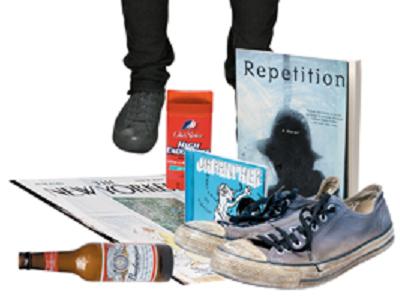
The feature puts The New Yorker in an, ahem, interesting light. First, here The New Yorker is defined as a hipster journal. I beg to differ, but I can’t deny that its reach encompasses George Saunders as well as Seymour Hersh. So in the makeover, Toal (or should I say “Toal”? He may be a real person, but the makeover is clearly facetious) discards The New Yorker in favor of “a Star Wars novel and a copy of Maxim.” Ah, good to know what “regular” people read! So what does Toal think?
Truth be told, I found myself enjoying tales from a galaxy far, far away. Despite the fact that they were written on a third-grade level, the lack of existential conflict and postmodern window dressing was refreshing. And the lightsabers were cool too. Maxim, it should be noted, was less revelatory, although I did learn six important tips on how to make a successful sex tape. I will be going back to The New Yorker and Harper’s, but I’m also going to make time for nerding out in sci-fi land.
Is “hipster” so strongly coupled with “intelligent” that its opposite automatically denotes a “third-grade level”? I don’t think so, but let’s move on.
Clearly, this is a backhanded compliment to The New Yorker—it’s the opposite of third-grade fare. But wait! Doesn’t that make it also a backhanded compliment to hipsters, too? In a feature about the necessity to de-hipsterize Williamsburg? Color me confused.
And the confusion doesn’t end there. If we showed ten random local culture vultures a Star Wars novel and The New Yorker and asked them to pick the purer hipster artifact, how many of them would reflexively single out the one that frequently dedicates considerable space to poverty and genocide? Surely it’s the Star Wars novel that reeks of hipster slumming, no? Even Maxim can be read ironically, you know.
At this rate we’ll need Jesse Thorn, mastermind of the new sincerity, to sort it all out.
Note to TONY: Did you mean McSweeney’s? Or was that too obvious?
—Martin Schneider
Letters: Dan Clowes Makes the Contributor Transition
Fantagraphics honcho Eric Reynolds writes from Seattle:
Hey, I read on your blog about the transition from subject to contributor. Dan Clowes might be another: he was profiled by Tad Friend a few years ago, and has done some commissioned comic strips for the mag. Although he may have actually been a contributor before he was profiled, I’m not certain…
Who’s got the answer? I bet someone does! Here’s a linky sidebar on newyorker.com about Clowes and his work.
A New Yorker Lexicon: What Hath Sanguinity Wrought?
Did you see the “100 Words Every High School Graduate Should Know” that the makers of The American Heritage Dictionary are touting? It’s a pretty good list, actually, although such an enterprise is always going to be a bit random. I confess there are more than a few terms (mostly science-related, e.g. “gamete“) that I would not be able to define to my own satisfaction.
I decided to run the words through The Complete New Yorker to see if The New Yorker “knew” them all. Sure, you’re thinking, it’s everything since 1925! They’ll all come up dozens of times, silly! But ah, I could counter, it’s only abstracts and keywords and hastily typed summaries we’re talking about here.
Anyway, it turns out that the CNY balked on seven words. I find it very suspicious that two of the words it didn’t “know” were “suffragist” and “enfranchise.”
Which of these words do you think would produce the most interesting set of results? The comments section awaits your opinion.
Here are the results. The winner, with yards to spare, was a surprise to me, as was the margin.
irony 435
totalitarian 59
infrastructure 52
wrought 48
metamorphosis 47
epiphany 39
hubris 32
lexicon 30
equinox 28
filibuster 27
kinetic 27
paradigm 25
nomenclature 22
euro 20
hegemony 20
impeach 20
obsequious 19
nihilism 18
soliloquy 18
vortex 17
gauche 16
incognito 16
reciprocal 16
facetious 15
vehement 13
bellicose 12
diffident 12
homogeneous 12
incontrovertible 12
precipitous 12
acumen 11
chromosome 11
feckless 11
lugubrious 11
tempestuous 11
auspicious 10
chicanery 10
fatuous 10
omnipotent 10
sanguine 10
tectonic 10
vacuous 10
fiduciary 9
respiration 9
abstemious 8
loquacious 8
plasma 8
taxonomy 8
antebellum 7
circumnavigate 7
deleterious 7
gerrymander 7
unctuous 7
yeoman 7
evanescent 6
kowtow 6
oligarchy 6
plagiarize 6
polymer 6
quotidian 6
supercilious 6
usurp 6
photosynthesis 5
reparation 5
belie 4
churlish 4
nanotechnology 4
nonsectarian 4
orthography 4
winnow 4
abjure 3
deciduous 3
hemoglobin 3
hypotenuse 3
parameter 3
ziggurat 3
laissez faire 2
recapitulate 2
tautology 2
thermodynamics 2
abrogate 1
bowdlerize 1
circumlocution 1
enervate 1
gamete 1
inculcate 1
jejune 1
mitosis 1
oxidize 1
parabola 1
pecuniary 1
quasar 1
subjugate 1
enfranchise 0
expurgate 0
interpolate 0
moiety 0
notarize 0
suffragist 0
xenophobe 0
Notes:
* A friend observes: “Jejune” is the month after “Mimay.”
* I don’t really see why anyone needs to know the words “yeoman” and “moeity” in 2007. [I’d argue for “yeoman,” used sparingly, but what would George Orwell say about some of these slovenly Latinate clunkers? —Ed.]
* “Quasar” has one hit—in which it is mentioned as a difficult word that nobody knows. It’s a cartoon from the 8/21/1965 issue by Alan Dunn. Mother to inquisitive son: “If you want to know what a quasar is, I’d say you’ve come to the wrong person.â€
* A story in the current issue (June 4, 2007) explicitly refers to “sanguine” as a difficult word, the kind of word someone would look up in a dictionary. In fact, Karl Rove looks it up in a dictionary.
* For me, the big shockeroo is the total for “wrought.”
—Martin Schneider
Pick of the Issue That Wasn’t: My Favorite Story in the May 14 Issue
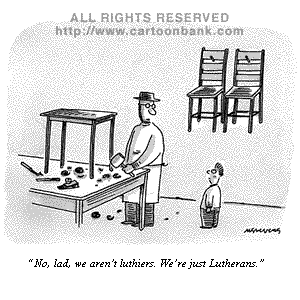
Apologies to Mick Stevens, and all religions. And kudos to Burkhard Bilger for writing such a kick-ass piece about visionary guitar builders. I was in Wolcott, Vermont, or thereabouts, yesterday and saw a sign for a custom guitar shop; I wonder if that guy knows Ken Parker, the subject of Bilger’s profile (not a Profile, I know, but it’s kind of a profile anyway)?
Here’s the original cartoon to which I refer in my Photoshop adulteration there. Wasn’t it in the magazine just a few months ago rather than in 1999, or am I confusing dates and times again? It does happen.
Register: Titled Newsbreaks, 1Q74
Happy birthday, Martin!
ANSWERS TO HARD QUESTIONS 1/21 71; 2/18 91
ANTICLIMAX DEPARTMENT 2/4/46
CLEAR DAYS AT THE UNIVERSITY OF CHICAGO 3/4 94
CLEAR DAYS IN SACRAMENTO 1/14 94
DEPT. OF UNDERSTATEMENT 2/11 68
DEPT. OF UTTER CONFUSION 3/11 130
FULLER EXPLANATION DEPT. 2/25 108
HOW’S THAT AGAIN? DEPARTMENT 3/11 111
MOST FASCINATING NEWS STORY OF THE WEEK, WITH JUST A TOUCH OF PATHOS 3/25 132
OUR OWN BUSINESS DIRECTORY 2/25 99; 3/18 138
REMARKS WE DOUBT EVER GOT FIZZED, EXPLODED, GRUMPED, CROAKED, OR SPAT 3/4 70
SECRECY IN AMERICA 2/25 116
SOCIAL NOTES FROM ALL OVER 1/21 60; 3/11 105
THE BUREAUCRATIC MIND AT WORK 2/4 106
THE CLOUDED CRYSTAL BALL 3/4 79
THE GOOD OLD DAYS 1/7 62, 3/25 124
THE MYSTERIOUS MIDDLE WEST 1/7 51
THERE’LL ALWAYS BE AN ENGLAND 3/4 66
UH HUH DEPARTMENT 1/14 66
WORDS OF ONE SYLLABLE DEPT. 3/11 124; 3/25 76
Notes:
* Calvin Trillin article on Garrison, NY; my brother used to live there!
* Penelope Gilliatt profile of Woody Allen; definitely one of those “even more interesting in hindsight” pieces, wincha think?
* Roger Angell article about Super Bowl VIII presented in a sardonic way that would not be possible today; accompanied by a drab Steinberg of a football player with Mickey Mouse for a head; nice.
* Elizabeth Drew two-part report on Watergate actual diary entries rather than regular reporting; these were among her first dispatches; swell.
* Ellen Willis pops up a few times doing rock reviews; love that!
—Martin Schneider
Bridezillation Nation: Interviews With Rebecca Mead
I’ll be at the New York Public Library tonight with the brilliant and beautiful Newyorkette to see Rebecca Mead’s conversation with Henry Alford about her new book, One Perfect Day: The Selling of the American Wedding. The talk’s sold out, I’m afraid, but the book isn’t. Read the top Amazon comment (“Inbel”); it’s pretty smart. Hey, Penguin, who did the jacket design? I like it.
Here’s an interview with Mead from the Wichita Eagle, or the San Antonio Express-News, or apparently both. A review I wrote for Newsday in 1999 turned up in the Moscow Times just the other day; perhaps all this repurposing is getting out of hand. Kelly Bare interviewed Mead (who says, “There is a culture of weddings that is conspiring to make bridezillas of us all if it possibly could”) for newyorker.com.
Other event news: Cartoonist John Donohue is giving a Mediabistro seminar on gag cartoons (those are the kind you see in The New Yorker (where he’s published) on June 12, reports Lusty Lady, a.k.a. Rachel Kramer Bussel.
And because I have very spotty television and no cable, I’m thrilled to see that Turner Classics is going to put a bunch of old movies online. Can the Benchley oevre be far behind?
The Margin of This Post Is Too Small to Contain a Gladwell Mystery
I’m making my way through the highly alluring videos from the inaugural New Yorker Conference a couple of weeks ago. In his lecture on “Genius: 2012,” Malcolm Gladwell discusses Fermat’s Last Theorem, which (according to Wikipedia) states that
if an integer n is greater than 2, then the equation an bn = cn has no solutions in non-zero integers a, b, and c.
After realizing this, Fermat famously wrote, “I have discovered a truly remarkable proof which this margin is too small to contain.” Which Gladwell explains, more or less, and then says this:
It leads to one of the greatest, ah, graffiti in the history of the New York subway system. I think it’s still there, on Washington Square. Someone has scribbled Fermat’s Theorem on the wall, and then below it they say, “I have the solution, but my train is coming.”
Question: Anyone seen this graffito? Where is it exactly?
Later on, Gladwell talks about the “10,000 hours rule” (fascinating!), which he identifies as a signal finding of the “expertise literature.”
My new favorite term is “expertise literature.”
—Martin Schneider
5.21.07 Issue: Very Linky, But Not Lactose-Free
In which some or all of the staff of Emdashes (me, the masterly Martin Schneider, and cherished intern John Bucher), put the blue ribbons on last week’s Wilburs.
I’ve got to give it to Larry Doyle’s Shouts, “Share Our Joy,” for signaling the magazine’s elegant long jump into true interactivity with a) a story that has ersatz links in it, 2) the actual links in the story online, and 3) additional web content now featured, subtly and tastefully, under selected print stories (the more the better, in my opinion). For instance, Peter Schjeldahl’s Edward Hopper review has an accompanying slide show, noted right after the print story, just where it’s needed. Jill Lepore’s “The Meaning of Life” was an intense pleasure to read: informative, bold, and dreamy, all at once. Anthony Gottlieb’s review of books about atheism was a highlight, too, and prompted a pleasant memory of Paul Bloom’s terrific Atlantic story “Is God an Accident?” I loved these Barsotti, Crawford, and Talk, to a deathless libretto from my own educational era: You know the one: “The macaroni’s soggy,/The peas are mushed,/And the chicken tastes like wood.” —EG
Best somewhat creepy lactic metaphor: no, not the milk of human kindness, but this one, by Anthony Lane in his Talk about the French elections. “Awaiting your hero for more than two hours is no hardship to the faithful; standing for two hours without earplugs, however, while the cream of soft Euro-rock is hosed into your consciousness, is another matter.” —JB